


Argentinean Prosecutor Threatens on Revoke Cristina Kirchner’s Home Arrest
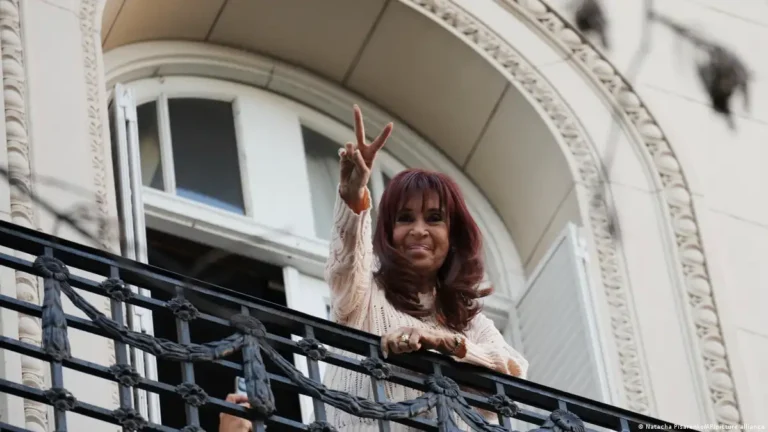
(FILE) Photo: AP.
March 26, 2026 Hour: 7:59 pm
🔗 Comparte este artículo
The move by the Argentina’s Prosecutor’s Office originated after the massive march for the 50th anniversary of the last coup d’état, when thousands of people greeted the former President in front of her home.
An Argentina’s Prosecutor on March 26, officially requested the Federal Oral Court Nº 2 to compel former President Cristina Fernández de Kirchner to avoid popular gatherings at her Buenos Aires residence, warning of potential revocation of her home arrest benefit if such situations recur.
The Prosecutors, Diego Luciani and Sergio Mola, formally submitted their request, emphasizing that repeated incidents that “alter public order” could lead to the annulment of the home arrest status currently enjoyed by the former Head of State.
This judicial move stems from a massive demonstration commemorating the 50th anniversary of the coup d’état, where thousands of supporters greeted the former President at her residence in Buenos Aires City. The Prosecutor’s written submission highlights that Kirchner’s presence on her balcony for over an hour, while the public saluted her, contradicts the norms of peaceful coexistence mandated by the tribunal.
The prosecution argues that these self-convened gatherings jeopardize the personal security of the petitioner herself, which was the primary justification for granting her house arrest in the first place. The filing asserts that the display of militancy in the neighborhood disrupts normal traffic circulation and the tranquility of residents in the Constitución area, transforming a residential street into a site of sustained public congregation.
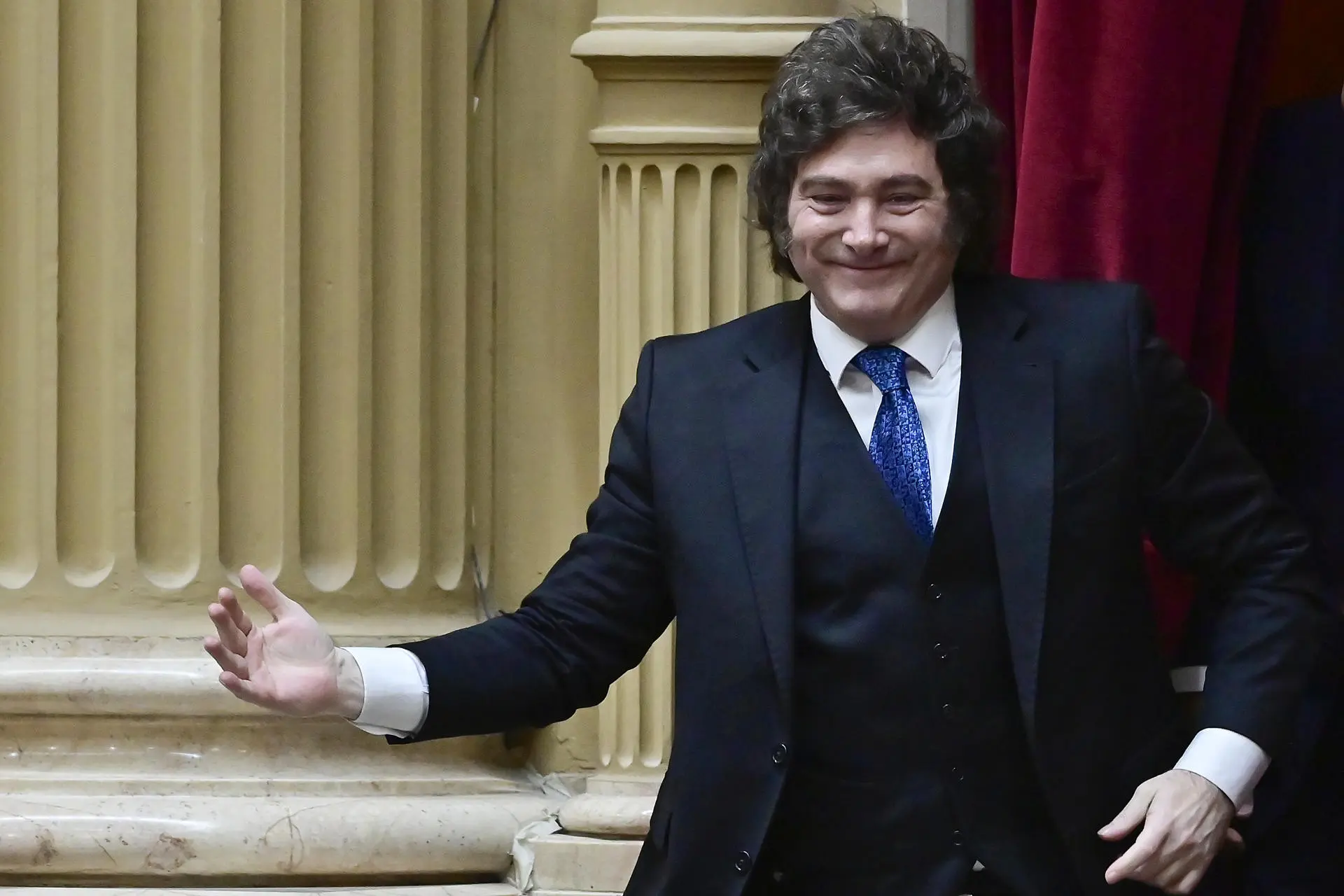
This judicial offensive unfolds at a critical juncture for the Argentinean Government, which is currently facing multiple corruption allegations against Cabinet Chief Manuel Adorni and escalating complications in the $LIBRA case, which have now implicated President Javier Milei.
Text reads: “Argentina’s former President, Cristina Fernández de Kirchner, peered out from her balcony to greet thousands of militants commemorating the 50th anniversary of the country’s latest coup d’état. Wearing a giant headscarf with the caption “Memory, Truth and Justice”, Kirchner joined in the popular clamor to reclaim the 30,000 kidnapped from the civil-military dictatorship…”
Opposition sectors have denounced a “judicial mafia” and have rallied behind Cristina Kirchner in Comodoro Py, the federal courthouse complex. The former President’s defense team is meticulously evaluating their next steps, characterizing the prosecution’s stance as inherently political rather than strictly legal, consistent with a perceived strategy of lawfare. Her lawyers firmly contend that merely waving from a balcony does not constitute a crime nor does it violate the mobility restrictions inherent to her current detention status, framing the act as a spontaneous expression of public support rather than a deliberate provocation.
Furthermore, the defense has highlighted the historical context of political figures interacting with supporters from their residences, arguing that such acts are deeply ingrained in Argentinean political culture and should not be criminalized under the guise of disrupting public order. They plan to challenge the prosecution’s interpretation of “altering public order”, asserting that the gathering, while large, was largely peaceful and a legitimate expression of democratic participation.
Ultimately, the Court is expected to decide whether to accede to the prosecution’s request or simply incorporate it as a precedent without immediate consequences for the terms of her sentence.
The judicial tension has intensified following recent statements by President Javier Milei, who, before the Legislative Assembly, confidently asserted that the former Head of State would remain in custody for an extended period, signaling a hardened stance from the Executive Power. This backdrop further politicizes the court’s upcoming decision, with observers keenly watching for any indication of judicial independence or alignment with political pressures.
The outcome will not only determine the immediate future of Cristina Fernández de Kirchner but also set a significant precedent for the balance of judicial power and political expression in Argentina.
Author: Laura V. Mor
Source: Pagina 12/ Tiempo Argentino